NEW WORLD SCREWWORM (Cochliomyia hominivorax)
This notice is issued to increase awareness of New World Screwworm (NWS), a serious parasitic disease affecting livestock, companion animals, wildlife, and occasionally humans.
What is New World Screwworm?
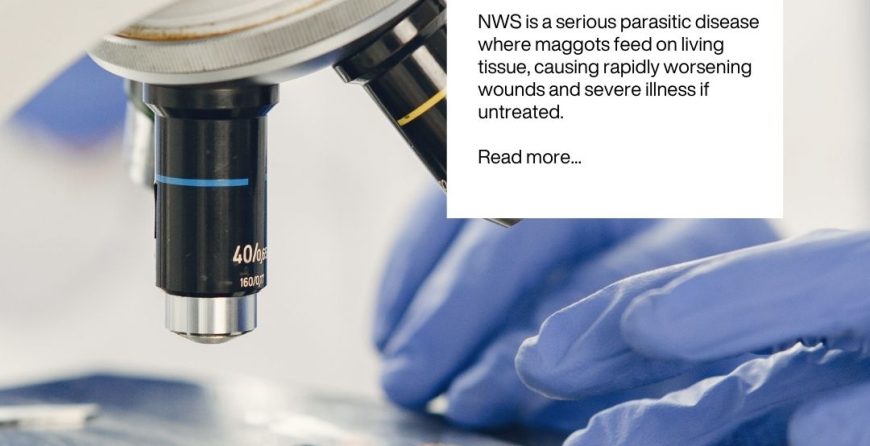
New World Screwworm is caused by the larvae (maggots) of the fly Cochliomyia hominivorax. Unlike most fly larvae, NWS larvae feed on living tissue, causing rapidly expanding wounds that can result in severe illness, debilitation, and death if left untreated.
Clinical Signs
Veterinarians should maintain a high index of suspicion in animals presenting with:
- Non-healing or rapidly enlarging wounds
- Wounds containing visible maggots
- Foul-smelling wound discharge
- Pain, irritation, or excessively licking wounds
- Depression, lethargy, weakness
- Reduced feed intake or weight loss
- Head shaking or scratching when ears, nostrils, or horn bases are affected
- Wounds associated with tick bites, branding, castration, dehorning, shearing, parturition, surgical procedures, or traumatic injuries
Immediate Actions if NWS is Suspected
- Isolate affected animals when practical.
- Do not remove all larvae before collecting diagnostic samples.
- Collect representative larvae for laboratory identification.
- Preserve specimens according to official veterinary authority instructions.
- Photograph lesions whenever possible.
- Immediately notify the Cayman Islands Department of Agriculture Vet Services Unit at reportnotifiabledisease@gov.ky .
Treatment Principles
- Mechanical removal of larvae.
- Thorough wound cleaning and debridement.
- Application of approved larvicidal products.
- Systemic treatment as clinically indicated.
- NexGard (afoxolaner) and NexGard COMBO to treat NWS in dogs and cats.
- Credelio Cat (lotilaner) for treating NWS in felines.
- Appropriate pain management and antimicrobial therapy
- Follow-up examinations to ensure complete elimination of larvae.
Reporting Requirements
New World Screwworm is considered a disease/event of major veterinary significance. All suspected cases must be reported immediately to the Cayman Islands Department of Agriculture Veterinary Service. Early detection is critical to preventing establishment and spread.
Biosecurity Recommendations
- Inspect wounds regularly.
- Promptly treat all injuries.
- Maintain effective fly control programs.
- Monitor animals following surgical procedures and parturition.
- Educate animal owners on early signs of infestation.
Prompt reporting and rapid response are essential to protecting animal health and the livestock industry.