Department of Agriculture Strengthens Biosecurity Preparedness Through Successful Cane Toad Interception into the Cayman Islands
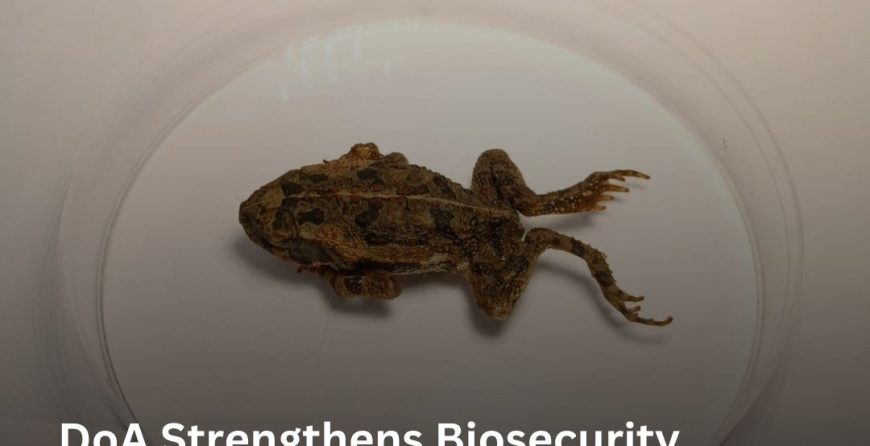
George Town, Grand Cayman, 18 August 2026 — The Cayman Islands Department of Agriculture (DoA) through its Agricultural Health Inspection Services (AHIS), is highlighting an important biosecurity success following the interception of a live cane toad (Bufo marinus) in an incoming shipment on 16 July 2026.
The interception occurred just weeks after cane toads were identified as one of the Cayman Islands’ priority biosecurity threats during a Horizon Scanning Workshop held from 22–25 June 2026.
The workshop was organised by the Department of Agriculture (DoA) and Department of Environment (DoE), in collaboration with the Royal Society for the Protection of Birds (RSPB), as part of a Darwin Plus-funded initiative to strengthen the Cayman Islands’ preparedness for invasive species and other emerging biosecurity threats.
The successful interception provides a clear example of how investment in horizon scanning, biosecurity preparedness, risk assessment and strengthened frontline surveillance can translate into practical action at the border.
Identifying threats before they arrive
The Horizon Scanning Workshop brought together local and international experts and key stakeholders to identify organisms that are not currently found in the Cayman Islands but could pose environmental, agricultural, economic or biosecurity risks if introduced.
Cane toads were identified as a significant potential threat because of their ability to reproduce quickly, adapt to a range of environments and spread rapidly once established.
Their toxic secretions can seriously harm or kill native wildlife and domestic animals that attempt to eat them. If cane toads became established in the Cayman Islands, they could place additional pressure on native biodiversity, disrupt local ecosystems and create significant long-term costs associated with management and control.
Identifying cane toads as a priority threat through horizon scanning provided an opportunity to strengthen awareness and preparedness around a species that is not currently established in the Cayman Islands.
Strengthening frontline biosecurity
Through funding from the Darwin Plus biosecurity project, the Department of Agriculture has employed a dedicated Biosecurity Officer who has been serving for more than one year.
Working closely with the Department’s Agricultural Health Inspection Services (AHIS) and other frontline personnel, the officer has helped strengthen surveillance and inspection activities and improve the country’s ability to identify potentially harmful organisms entering through trade pathways.
The interception of a live cane toad demonstrates the importance of having trained personnel and effective inspection systems in place to detect potential threats before they can become established.
The fact that a species identified as a priority threat during the June Horizon Scanning Workshop was subsequently intercepted at the border highlights the value of connecting risk assessment with practical frontline biosecurity measures.
Early detection is critical
Invasive species can be significantly more difficult and costly to manage once they become established.
Early detection provides the best opportunity to prevent an introduced organism from establishing a population and spreading into the wider environment. This is particularly important for island ecosystems such as the Cayman Islands, where invasive species can have significant impacts on native biodiversity, agriculture, domestic animals and the wider economy.
Cane toads are already established in many parts of the world and have demonstrated the ability to thrive in a wide range of environments. Preventing their introduction and establishment in the Cayman Islands is therefore an important component of protecting the country’s natural environment and agricultural resources.
A coordinated approach to biosecurity
The successful interception reflects the combined efforts of horizon scanning, risk assessment, trained personnel, surveillance and inspection activities.
The Department of Agriculture (DoA) and Department of Environment (DoE) commend the officers and partners involved in the identification and interception of this potential threat.
Director of Agriculture, Mr. Wilbur Welcome, stated:
“This interception is a clear demonstration that our biosecurity systems are working as intended. By combining horizon scanning, trained inspection teams and strengthened surveillance, we can identify and stop potential threats before they become established. This is exactly the kind of early action that protects the Cayman Islands’ environment, agriculture and economy.”
The achievement also demonstrates the importance of continued collaboration among Government agencies, international partners and other stakeholders in strengthening the Cayman Islands’ biosecurity preparedness.
Biosecurity is an ongoing responsibility. New threats can emerge through international trade, travel and other pathways, making continued surveillance, preparedness and early detection essential.
Continued vigilance remains important
The Cayman Islands Government agencies will continue strengthening their capacity to identify and respond to invasive species and other emerging biosecurity threats.
Early action remains one of the most effective tools available to protect the Cayman Islands’ unique environment, economy, agriculture and biodiversity from invasive species
END
About the Ministry of Planning, Lands, Agriculture, Housing & Infrastructure (MPLAHI)
The Ministry of Planning, Lands, Agriculture, Housing & Infrastructure (MPLAHI) is responsible for advancing national priorities across planning, lands, agriculture, housing, and infrastructure in the Cayman Islands. Our Mission,
To develop and implement integrated policies, programmes, and infrastructure solutions that enhance land use, strengthen food security, improve housing access, and support climate-resilient development, guided by innovation, equity, connection, and integrity. Through strategic leadership and collaboration, the Ministry works to deliver sustainable outcomes that support economic resilience, environmental stewardship, and long-term prosperity for the people of the Cayman Islands.
About the Department of Agriculture
The Department of Agriculture operates under the Ministry of Planning, Lands, Agriculture, Housing & Infrastructure and is responsible for supporting the sustainable development of the Cayman Islands’ agricultural sector. The Department provides services and programmes that promote local food production, strengthen food and nutrition security, support farmers and producers, and encourage environmentally responsible agricultural practices. Through policy implementation, technical support, and service delivery, the Department works to enhance resilience, productivity, and long-term viability within the agricultural industry.
About the Department of Environment (DoE)
The Department of Environment aims to protect and sustainably manage the natural environment and resources of the Cayman Islands through scientific research, effective regulatory frameworks and public education. Invasive species incursion prevention and management continues to be a significant part of the DoE’s remit given the devastating impacts posed to native and endemic wildlife.
Learn more about the impacts of invasive species at www.doe.ky/invasive-species
Media Contact:
(345) 244-2412