NEW WORLD SCREWWORM INFORMATION TO LIVESTOCK FARMERS
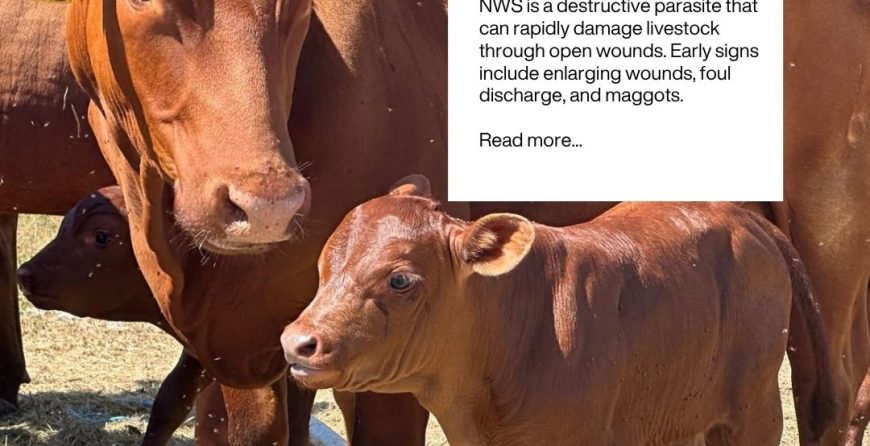
New World Screwworm (NWS) is a highly destructive parasite whose larvae feed on living tissue. Cattle, sheep, goats, pigs, horses, and wildlife can all be affected. There is currently an ongoing outbreak of NWS in the United States, however, currently the Cayman Islands remains free of NWS. Nonetheless, we must take steps to prevent entry and remain prepared.
Animals at Highest Risk
Animals with:
- Open wounds
- Ear tag sites
- Branding wounds
- Castration wounds
- Dehorning sites
- Tick bites
- Umbilical wounds in newborns
- Injuries from fencing or transport
- Post-partum reproductive tract injuries
Clinical Signs
- Wounds that become larger and deeper over time
- Bloody or foul-smelling discharge
- Visible maggots within wounds
- Animals separating from the herd
- Reduced feed intake
- Weight loss
- Restlessness, discomfort, or excessive rubbing
- Sudden unexplained decline in condition
Prevention Measures
- Inspect livestock frequently, especially animals with wounds.
- Treat injuries immediately.
- Maintain strong fly-control programs
- Fly traps and glue sticks can be purchased from local stores
- Catron IV can be purchased via the DoA warehouse/sales department
- Monitor animals after husbandry procedures.
- Remove carcasses promptly and dispose of them in accordance with the Department of Environmental Health guidance
- Maintain good farm hygiene and biosecurity.
If You Suspect New World Screwworm
- Do not move affected animals unless necessary.
- Contact the Cayman Islands Department of Agriculture at 947-3090 or 916-2218
- Report the suspected case without delay.
- Follow instructions regarding sample collection, movement restrictions, and treatment.
Why Reporting Is Important
New World Screwworm can spread rapidly and cause major animal welfare and economic losses. Immediate reporting allows the Cayman Islands Department of Agriculture to investigate, confirm cases, and implement control measures to protect the livestock industry.
Protect your animals by checking wounds regularly and reporting suspicious cases immediately.